 By Kieran Westcliffe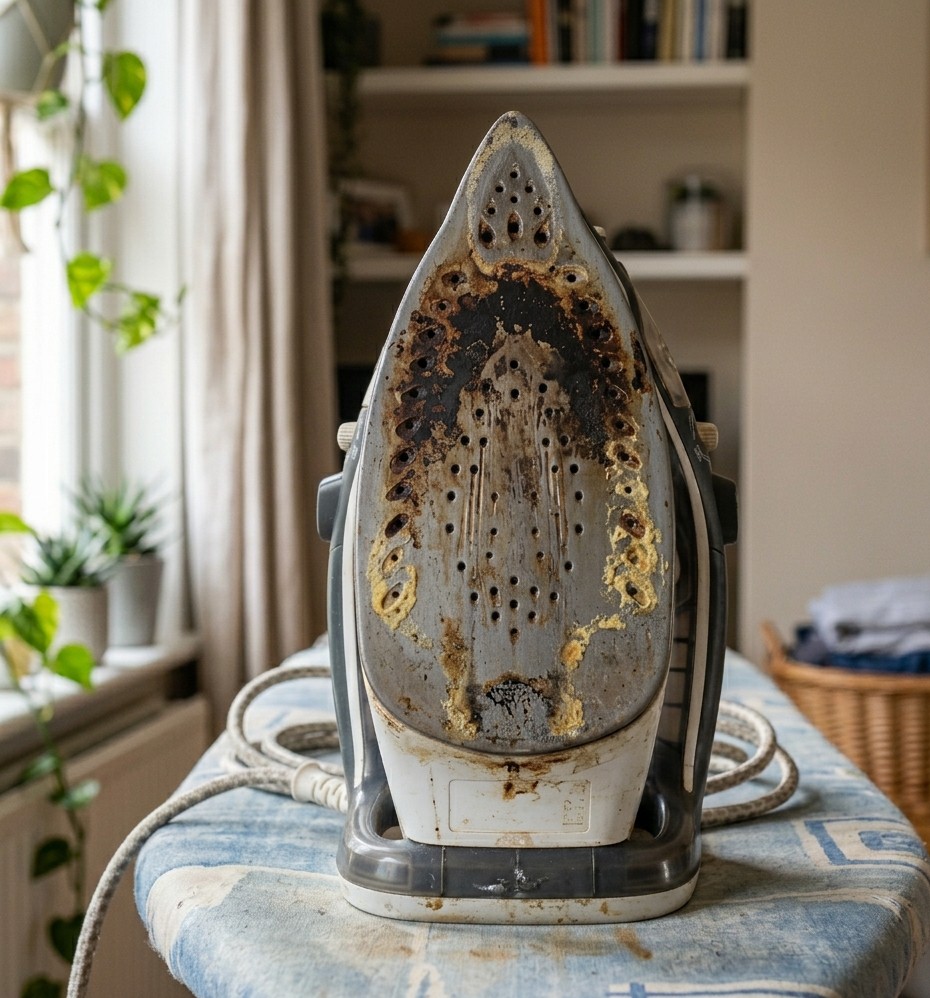
You are halfway through ironing your best white shirt – the one you are already running late to wear – and instead of crisp, smooth perfection, the iron deposits a long brown smear directly across the front. The shirt is unwearable. The iron is your enemy. And somewhere in the back of your mind, you know you should have dealt with this weeks ago, but you kept pressing on (quite literally) and hoping the problem would resolve itself. It did not. It never does.
A dirty soleplate is one of those domestic problems that announces itself at precisely the worst possible moment, ruins something you care about, and then sits innocently on the ironing board looking faintly smug. The good news is that cleaning it properly takes about twenty minutes, requires nothing more exotic than items already in most kitchens, and means you will never again have to explain to anyone why your freshly ironed tablecloth looks like a Jackson Pollock.
Why Soleplates Turn Against You
Built-Up Residue – More Than Just Burnt Fabric
Most people assume a brown, gunky soleplate is purely the result of ironing something at too high a temperature. That is certainly one cause – synthetic fibres can melt at temperatures a standard iron reaches without difficulty, and even a brief moment of inattention on a polyester blouse can leave a sticky, caramelised deposit on the plate. But the build-up is rarely just one thing. Tap water used in steam irons leaves behind mineral deposits over time, particularly in areas like London where the water is notoriously hard. Fabric starch and conditioners leave their own thin residue with every use. Any scorch from a previous session can harden and accumulate into a layer that becomes progressively more abrasive and discolouring with every subsequent press.
Why the Problem Only Gets Worse With Time
A dirty soleplate does not stabilise – it compounds. The residue already present acts as a bonding surface for more residue, meaning that every time you iron near a synthetic fabric or use a spray starch, another layer adheres to what was already there. The deposits also create uneven heat distribution across the surface, which leads to patchy ironing results even on fabrics the brown marks do not visibly transfer to. And the longer the build-up goes unaddressed, the harder it becomes to remove without resorting to more abrasive methods – which brings their own risk of scratching the soleplate’s coating. Early intervention is always easier than late-stage damage control.
The Methods That Actually Work
White Vinegar and Salt – The Storecupboard Rescue
This method has been quietly doing the rounds in domestic circles for years, and with good reason. Mix a tablespoon of table salt into a small bowl of white distilled vinegar to create a mildly abrasive, mildly acidic cleaning solution. Lay a clean cloth flat on your ironing board, soak it thoroughly with the mixture, and run the cold iron – repeat, cold iron – back and forth across the cloth several times. The acid in the vinegar dissolves mineral deposits and softens burnt-on residue, while the fine salt provides just enough gentle abrasion to lift it from the surface.
For stubborn spots, apply a little of the mixture directly to the affected area with a cloth and work in small circular motions. Follow up by wiping the entire soleplate with a clean damp cloth to remove any trace of salt or vinegar, then run the iron briefly over an old towel to confirm nothing transfers before using it on actual laundry. This works particularly well on stainless steel and non-stick soleplates with light to moderate build-up.
Bicarbonate of Soda Paste
Bicarbonate of soda is to the British kitchen what duct tape is to a film set: it solves an implausible range of problems with quiet efficiency. For soleplate cleaning, mix two tablespoons of bicarb with just enough water to form a thick, spreadable paste – roughly the consistency of toothpaste. Apply it directly to the cool soleplate with a cloth or soft brush, working it gently into any discoloured areas, and leave it to sit for two to three minutes before wiping away thoroughly with a clean damp cloth.
The mild alkalinity cuts through grease and organic residue without scratching or damaging the surface, making it an excellent choice for ceramic and non-stick coated plates where more abrasive methods carry greater risk. As with the vinegar method, finish by running the iron over a clean damp cloth or old towel to clear any remaining paste before it comes near your laundry.
The Paracetamol Trick (Yes, Really)
This one sounds like an internet myth, and yet it works with a reliability that is frankly more satisfying than it has any right to be. Heat your iron to its highest setting. Using a clean cloth or a pair of kitchen tongs – the plate will be very hot – press a standard 500mg paracetamol tablet firmly against the soleplate and rub it across the discoloured areas. The tablet melts on contact and acts as a solvent, dissolving burnt-on deposits and lifting them from the surface. Wipe the plate immediately with a clean cloth while it is still warm, and repeat as needed.
This method is particularly effective for hardened, burnt-on residue that the gentler approaches cannot fully shift. Two caveats worth noting: use uncoated tablets only, as the coating on some formulas can itself leave a residue; and avoid this method on ceramic soleplates, where the chemical interaction is less predictable. On stainless steel, however, it is genuinely one of the most effective tools in the kit.
Commercial Soleplate Cleaners – When You Mean Business
For irons with significant build-up, or where home remedies have not fully done the job, a dedicated commercial soleplate cleaner is worth knowing about. Products such as Faultless Hot Iron Cleaner or own-brand equivalents from larger supermarkets are formulated to dissolve the specific combination of mineral deposits, starch, synthetic fibre residue, and scorch that accumulates over time. They are typically applied to a warm – not hot – iron, allowed a short dwell time, then wiped clean. Follow the product’s instructions precisely, as temperature guidance and dwell times vary between formulas and soleplate materials.
Clearing the Steam Vents
Brown marks do not always originate from the flat surface of the soleplate. Steam vents are a common and frequently overlooked culprit, particularly in hard-water areas. Mineral scale builds up inside the vents and gets expelled with the steam, depositing a brown, rust-coloured residue directly onto whatever is being ironed. To clean them, dip a cotton bud into a solution of equal parts white vinegar and water and work it carefully into each vent to dislodge any scale. Many modern irons also have a self-cleaning or anti-scale function built in – consult the manual, as running this cycle every six to eight weeks can prevent significant build-up before it becomes a visible problem.
What Never to Use on a Soleplate
Steel wool, metal scouring pads, and rough abrasive cloths are firmly off the table. They will scratch the soleplate’s surface – whether it is non-stick, ceramic, or stainless steel – creating micro-grooves that trap more residue, snag delicate fabrics, and accelerate future build-up considerably. Neat bleach is equally inadvisable; it reacts unpredictably with soleplate coatings and can corrode the metal beneath over time. Sharp implements used to scrape off deposits are another common mistake that invariably makes the situation worse. The chemistry-based methods covered in this article will always be safer and more effective than any approach relying on physical force.
Prevention – Making Peace with Your Iron Long-Term
Small Habits That Make a Real Difference
A few consistent practices will eliminate the majority of soleplate problems before they start. Always match the iron temperature to the fabric being pressed – the guides on the dial exist for a reason, and exceeding them even briefly on a synthetic is precisely how residue begins. Use distilled or filtered water in the steam reservoir rather than tap water, particularly in London and other hard-water areas, to dramatically reduce mineral build-up in both the vents and the iron’s internal workings. Allow the iron to cool completely before storing it and, where space permits, store it upright – resting a warm soleplate face-down traps heat and can cause the plate to pick up residue from the ironing board cover. A quick wipe of the soleplate with a damp cloth after each session takes ten seconds and makes a genuine long-term difference.
A Note From the Professionals
A neglected soleplate is one of the most reliably damaging pieces of household equipment in everyday use – not from any single catastrophic failure, but through a slow accumulation of minor incidents that gradually ruins garments and linens you care about. The methods covered here address the full range of build-up severity, from a light seasonal clean with vinegar and salt right through to a more determined intervention for a plate that has been operating in quiet, brown-streaked protest for the better part of two years.
London homes present particular challenges: hard water accelerates mineral build-up faster than most manufacturers’ care guides anticipate, storage in smaller properties often means irons are kept in less-than-ideal conditions, and a notable proportion of households are working with appliances that have never been cleaned at all. None of that is irreversible. Pick the method that matches your situation, work through it methodically, and your iron will reward you with the results it was designed to deliver.